Why Building Agentic AI SOC is Hard?
Why Agentic AI sounds simple in theory, but real SOC environments make autonomy far harder to build, scale, and trust.

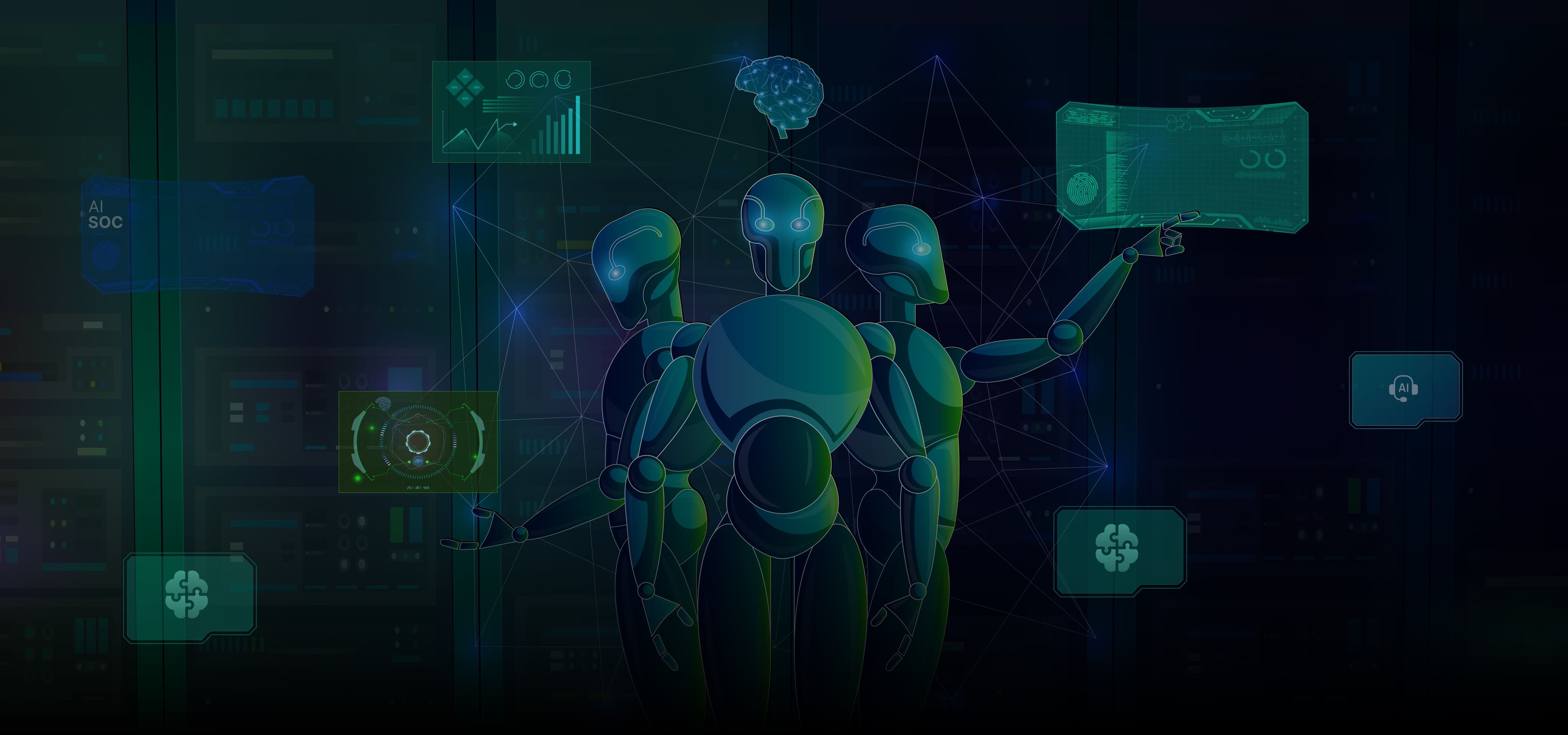
Agentic AI promises a real step forward from traditional, rule-based automation. On paper, it feels like the natural next phase of the modern SOC: systems that can investigate alerts, reason through evidence, and respond faster than human teams ever could.
In practice, getting Agentic AI to work reliably inside a Security Operations Center is far more difficult than it first appears. The hurdles aren’t limited to model performance. They come from how investigations actually unfold, how organizations capture knowledge, and how much autonomy teams are comfortable giving to machines.
The Fundamental Challenges Around Agentic AI Products
- The Cognitive Complexity of Investigations: Security investigations are rarely predictable. Unlike simple automation tasks, they don’t follow a fixed path. Each alert unfolds differently and often requires analysts to adapt based on context, risk, and experience. Recreating this behavior with AI is difficult because the logic isn’t linear.
- Recursive Reasoning: Investigating a single alert can involve anywhere between 10 and 40 distinct LLM invocations. Each step mirrors a piece of reasoning that human analysts perform almost subconsciously. Managing this kind of recursive flow, without losing context or accuracy, is challenging.
- Prompt Orchestration: Even when individual model outputs are sound, coordinating them is hard. The system needs to stay aligned to the investigation goal while deciding what to explore next and when to stop. Prompt orchestration often becomes one of the most fragile parts of the system.
- Handling Ambiguity: Following a predefined playbook with known data sources is manageable. The harder problem is knowing which sources to consult, under what context, and while adhering to which policy. These decisions are situational and introduce ambiguity that’s difficult to encode.
Why Business Context Matters in Real SOCs?
Security intelligence without context rarely leads to good decisions. One of the biggest barriers to an Agentic AI-based SOC is that critical organizational context is often missing during investigations. This typically includes:
- Internal policies
- Team or organization preferences
- Tribal knowledge and past decisions
A large portion of what determines a “correct” response still lives in people’s heads.
In older or heavily regulated environments, the gap is wider. Some historical context exists only on paper or with employees who have moved on, making it inaccessible through APIs or integrations.
A common response is to centralize everything into a data lake and connect it to the AI platform. In practice, this usually increases noise. Unfiltered context introduces conflicting signals and raises the risk of incorrect conclusions during investigations.
The Reality of Tool Integration
Integrating AI agents with existing security tools remains a major hurdle.
Most EDRs, SIEMs, and firewalls don’t yet support standardized interfaces like MCP servers, which means integrations often need to be hand-built.
Even when APIs are available, the AI needs to generate complex, tool-specific queries, such as Splunk SPL. This requires understanding not just syntax, but also data schemas, knowing which fields matter for a given user, host, or event.
Earning Trust in Autonomous Systems
A fully autonomous SOC isn’t realistic today. LLM hallucinations, incomplete context, and constantly evolving attack techniques all make unchecked autonomy risky.
Trust builds gradually. Organizations typically start with AI-assisted reporting, move to recommendations, and only later allow limited actions like closing benign alerts or isolating assets.
For this to work, transparency is essential. The system must clearly show:
- What information was used
- How it was interpreted
- Why a specific action or recommendation was made
Without a clear evidence trail, trust breaks down quickly.
Taken together, these challenges explain why building an Agentic AI SOC is harder than it initially appears. Intelligence alone isn’t the constraint. The real difficulty lies in keeping reasoning grounded in context, coordinating decisions across systems, and introducing autonomy without losing control.
At HarkX, we approach these problems as design and engineering challenges rather than theoretical limitations. Our focus is on building an Agentic AI SOC where intelligence is tightly coupled with context, orchestration, and safety from the very beginning, not added later as guardrails once things start to break.
About the author
Srinivas Rao is an AI/ML leader, product strategist, and enterprise transformation architect with nearly two decades of experience building enterprise-scale AI platforms, including Aadhaar's Identity Fraud Management System serving 1.3 billion citizens and Samsung Bixby. An IIT Kharagpur alumnus, he leads HarkX's product innovation, advancing the shift from traditional automation to autonomous, agent-driven security operations.
Loved this insight?
Share it with your network and help secure the digital world.