How Context-Aware Investigations Are Reshaping Modern Security Operations
Discover how context-aware investigations help analysts understand incidents faster and respond with confidence.


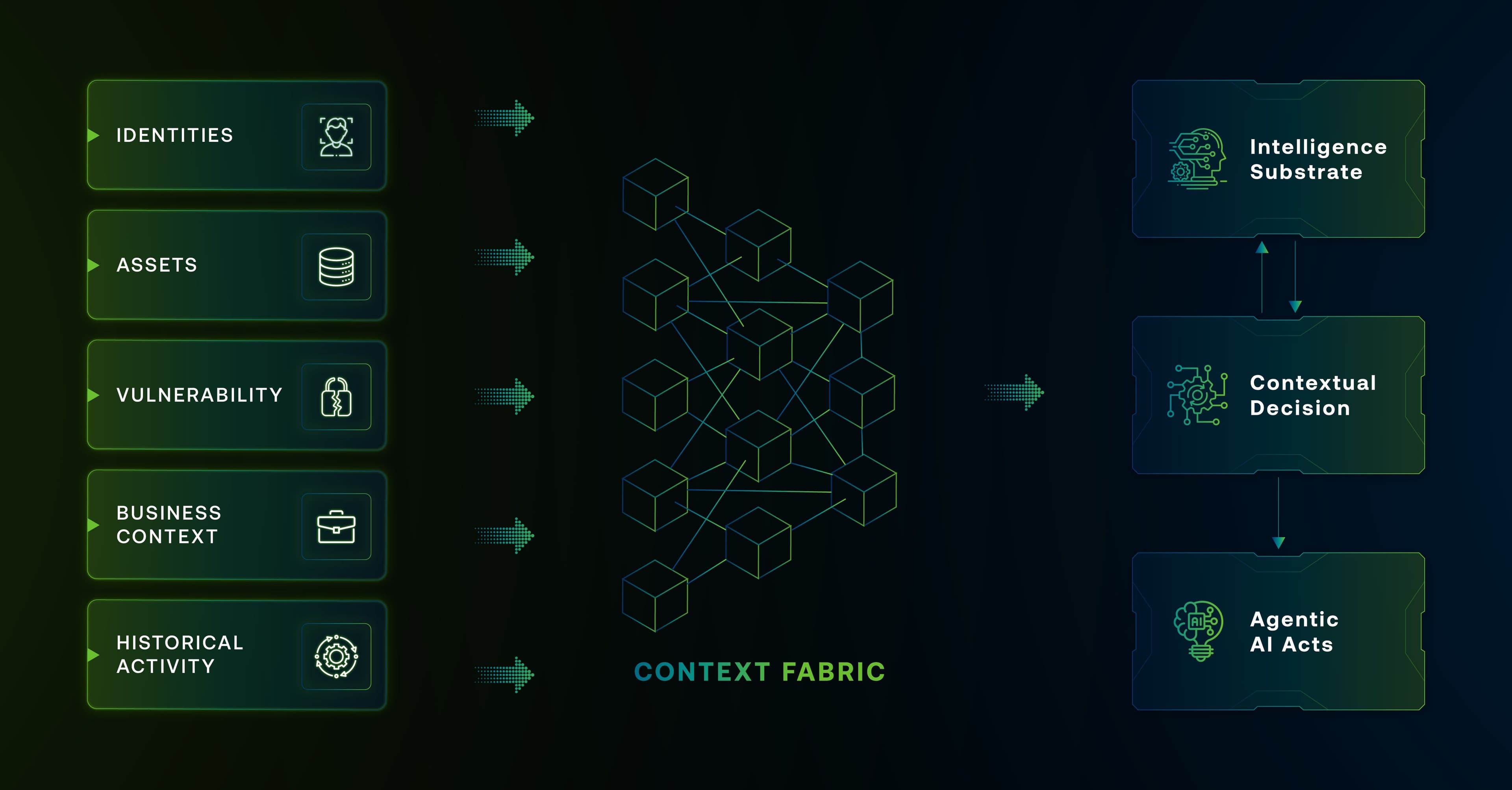
Modern security operations are being reshaped not by faster dashboards or more alerts, but by investigations enriched with broader operational visibility and coordinated more effectively from the beginning. As incidents move across identities, endpoints, cloud environments, and operational teams, investigations become the center of security operations, requiring analysts to preserve continuity, correlate activity, coordinate decisions, and maintain clarity throughout the incident lifecycle.
This complexity is amplified by the growing fragmentation of security environments. According to Vectra AI's 2026 State of Threat Detection Report1, 69% of organizations use more than 10 detection and response tools, while 39% use more than 20, making it significantly harder to maintain visibility across the investigation process. As environments become more distributed, security operations are shifting from alert-centric models toward investigation-centric operations, where the goal is no longer simply to generate more detections, but to help analysts understand incidents faster, make better decisions, and coordinate response more effectively.
From Alert-Centric Response to Investigation-Centric Operations
To understand how context-aware investigations change security operations, consider a common scenario.
A finance manager who regularly accesses Microsoft 365, Salesforce, and several internal applications from both corporate and personal devices.
One morning, the SOC receives a medium-severity alert related to unusual access activity.
At first glance, nothing appears suspicious.
- The user is successfully authenticated.
- The login originates from a familiar geography.
- Valid credentials are being used.
- No high-confidence detections are triggered.
On its own, the alert provides very little evidence of compromise. The user appears legitimate, the activity is successfully authenticated, and no critical detections are triggered.
The challenge is determining whether the alert represents normal business activity or something more significant.
The following layers show how additional context helped uncover the compromise.
Signal & Context Layer
Traditional Approach
The analyst reviews authentication logs and recent activity associated with the account.
The user appears legitimate, the login location is familiar, and no obvious indicators of compromise are present.
To gather additional context, the analyst must manually review endpoint management systems, device inventories, identity platforms, and historical activity records before determining whether the alert warrants further investigation.
HarkX Approach
When HarkX receives the alert, the investigation is automatically enriched using our USP, the Context Fabric.
HarkX correlates:
- Historical authentication activity
- Device inventory
- Endpoint compliance status
- Active authentication sessions
- Identity risk signals
- Asset ownership records
During correlation, HarkX identifies an anomaly that was not visible in the original alert.
The finance manager has an active authentication token associated with a personal BYOD that has not checked into endpoint management systems for six months and lacks current security posture validation.
Investigation Reasoning Layer
Traditional Approach
After identifying the unmanaged device and long-lived authentication session, the analyst must determine whether these findings represent normal business activity or a potential compromise.
This often requires repeated pivots across authentication logs, endpoint systems, session records, and historical activity to establish how the device, identity, and session activity are related.
HarkX Approach
HarkX correlates the unmanaged device, the long-lived authentication token, and the user's recent activity into a connected investigative narrative.
The investigation reveals that recent application activity is occurring through an authentication session that has remained active for nearly six months, despite the device no longer meeting compliance requirements.
While none of these findings independently generate a high-severity alert, together they suggest a potential persistence mechanism that warrants further investigation.
Rather than spending time manually correlating evidence across multiple systems, analysts can focus on assessing risk and determining the appropriate response.
Coordination & Response Layer
Traditional Approach
Once the unmanaged device and long-lived session are identified, security, identity, and endpoint teams may need to validate the findings independently before remediation can begin.
Context is often spread across multiple tools and teams, making it difficult for stakeholders to operate from the same understanding of the investigation.
HarkX Approach
Because findings, evidence, and recommendations remain connected throughout the investigation, stakeholders operate from a shared understanding of the incident.
Based on the investigation findings, the analyst determines that the active session associated with the unmanaged device should be revoked.
The expectation is that a legitimate user will simply reauthenticate through an approved device.
Why Modern Security Operations Metrics Are Changing
Traditional security operations have been measured through metrics such as alert throughput, ticket closure rates, and mean time to respond.
While these metrics remain important, they provide only a partial view of operational effectiveness.
Modern security operations increasingly require visibility into:
- Investigation quality
- Investigative confidence
- Cross-team coordination
- Operational friction
- Decision defensibility
- Consistency of response
These outcomes are influenced long before an incident is formally closed. They are shaped by how quickly analysts can access relevant information, how effectively teams coordinate decisions, and how much effort is required to understand and respond to an incident.
This is where context-aware investigations fundamentally change the operating model. Faster access to meaningful context improves investigative efficiency, while evidence-backed reasoning and improved coordination reduce delays throughout the incident lifecycle.
Security teams are not struggling because they lack data. They are struggling because the information required to make confident decisions remains fragmented across tools, teams, and data sources.
As environments become more complex, the ability to transform that fragmented information into coherent investigations becomes increasingly important. The future of security operations will be defined not by the number of alerts generated, but by how effectively organizations preserve continuity, support decision-making, and maintain investigative clarity from the first signal through final remediation.
The next generation of SOC platforms will not compete on the number of alerts they generate.
They will compete on how effectively they help analysts understand incidents, preserve investigative continuity, and make defensible security decisions.
Organizations that master context-aware investigations will be able to respond faster, reduce analyst fatigue, and maintain greater confidence in an increasingly complex threat landscape.
HarkX is building toward that vision.
Request a Demo - See how HarkX helps security operations teams investigate faster, reason with context, and make more confident security decisions.
Additional Resources
Why Building Agentic AI Is So Hard?
References
About the authors
Mahita Surapaneni is a marketing manager specializing in cybersecurity and emerging technologies. She leads content and thought leadership initiatives that help business and security leaders navigate topics such as Agentic AI, security operations, cyber resilience, and the future of autonomous security.
Sashank M is a Lead Security Analyst with over four years of experience in vulnerability assessment and penetration testing (VAPT), specializing in web, API, mobile, and network security. A recognized bug bounty hunter, he has earned Hall of Fame acknowledgments from organizations including Nokia and the United Nations, published CVEs and security research, and holds certifications including CREST CPSA, CMPen, CAP, and C-AI/MLPen.
Loved this insight?
Share it with your network and help secure the digital world.