What Attackers Lose When Defenders Adopt Autonomous Security Operations
Learn how autonomous security operations eliminate the investigation gaps that attackers rely on to stay hidden and expand access.


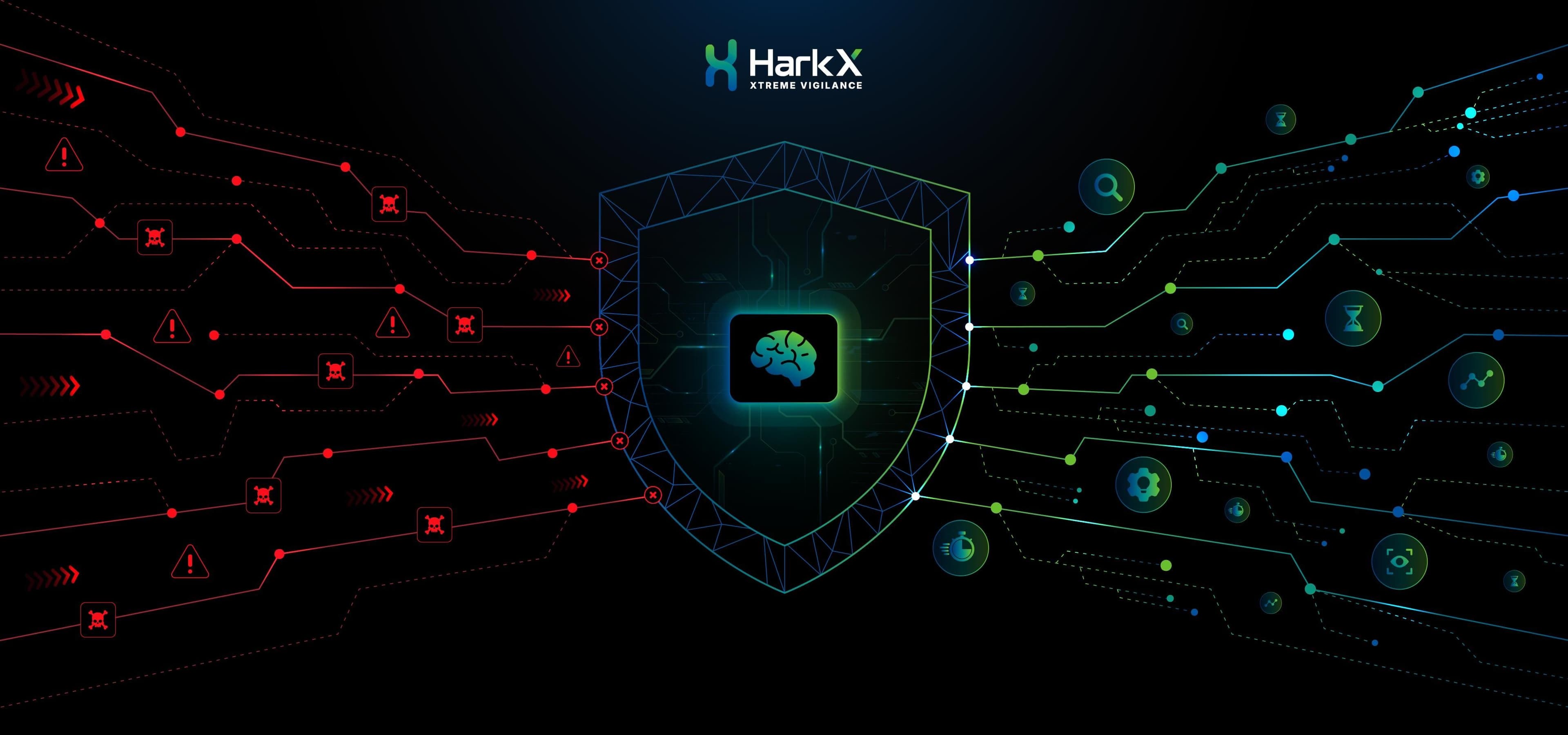
Attackers have always held a structural edge over defenders. They choose when to strike, which surface to target, and how long to stay, defenders have to be right every time, attackers only once. That asymmetry is built into how traditional security operations work: fragmented tools create seams between systems, alert backlogs create uninvestigated space, and slow investigation cycles create time that attackers use freely.
Of all the advantages attackers rely on, time is the most powerful because it is the enabler of every other advantage. Information asymmetry only pays off if the attacker has time to act on it. A fragmented security stack only helps the attacker if defenders have no time to correlate signals across tools. Scale only converts to damage if there is an open window long enough to exploit it. In traditional security operations, that window is created by the gap between detection and action.
Autonomous security operations close that window. When every alert is investigated continuously and at machine speed, attackers can no longer count on suspicious activity sitting untouched in a queue. The conditions that made the traditional security operations exploitable start to disappear.
The Attacker's Hidden Advantage
Traditional security operations have a built-in delay between signal and action. Alerts come in at high volume; analysts work through them in batches, and incidents only move forward once someone has gathered context, reviewed logs, and decided whether something is real. Most security teams have done everything in their power to manage this: severity tiering, auto-closing known-benign detections, rule suppression, and continuous tuning. Still, the volume that lands on human analysts for actual investigation consistently outpaces what they can handle at the depth needed to make good decisions.
That delay is exactly what attackers depend on. While analysts work through the top of the queue, an adversary can quietly test credentials, expand their reach, or establish long-term access inside alerts sitting untouched at the bottom. The attacker does not need to evade detection entirely. They just need to outlast the investigation backlog.
The numbers make this concrete. IBM's Cost of a Data Breach Report 2025 found organizations still take an average of 241 days to identify and contain a breach, with detection and escalation representing the single largest cost driver in the breach lifecycle at $1.47M on average. That is not enough time to investigate every alert at the depth it deserves. It is barely enough to keep the backlog from growing.
Why Continuous Investigation Changes the Game
Autonomous security operations fix delays by turning investigation into a continuous process, not a queued one. Instead of waiting for an analyst to reach an alert, the system immediately acknowledges it, pulls in context from across the environment, SIEM logs, EDR telemetry, identity events, cloud activity, asset inventory, and external threat intelligence, correlates it, and produces an evidence-based assessment. Agentic AI does not just execute a predefined playbook. It reasons through what is happening, follows the evidence thread, and decides whether escalation is needed.
This matters beyond raw speed because it restores investigation coverage. Medium and low-severity alerts are the first to get skipped when the queue fills up; they are also the tiers where sophisticated attackers deliberately operate during early-stage intrusion, precisely because they know the queue pressure will protect them. When every alert gets investigated regardless of severity, that protection disappears. This is why metrics like dwell time data reflect how much ground defenders have already gained. Palo Alto Networks' Unit 42 reported that median attacker dwell time in 2024 dropped to 7 days, down from 13 days in 2023. That trend shows defenders are already closing gaps faster. Autonomous SOCs are designed to push that number further, not just by speeding up a single step, but by eliminating the idle time between steps entirely.
What Attackers Lose
The first thing attackers lose is backlog as camouflage. Sophisticated attackers know that not every alert will be investigated, especially if it lands in a lower-severity tier. In traditional security operations, that gives them room to let suspicious activity sit inside the noise. When every alert is investigated as it arrives, that hiding layer starts to disappear.
The second thing they lose is predictability. Traditional security operations have observable patterns: morning shift triage, escalation handoffs, ticket SLA timers. Experienced attackers know that a detection at 3AM will likely sit unreviewed until the next business shift. Autonomous investigation removes those patterns entirely. Response happens continuously, independent of shift schedules, staffing levels, or analyst availability.
The third thing they lose is time to deepen access. The period between initial access and the point where an attacker becomes truly embedded is narrow but critical. CrowdStrike's 2026 Global Threat Report found the average breakout time, the time from initial compromise to lateral movement has dropped to just 29 minutes. That is the window defenders need to interrupt. When investigation and triage happen at machine speed, that window can be closed before privilege escalation or persistence mechanisms have a chance to take hold.
Why This Is More Than Just Automation
Each of those losses, backlog camouflage, predictable investigation windows, time to deepen access, points to the same underlying shift. The attacker's operating model has always depended on defenders being structurally slower. Not less skilled, not less tooled but slower, by design, because human-speed investigation cannot keep pace with machine-speed attack volume.
That structural advantage disappears when security operations move from queued investigations to continuous investigation. Attackers lose the ability to hide in uninvestigated queues. They lose the predictable gaps between detection and action. They lose the quiet intervals that attackers depend on to deepen their foothold. And they lose the asymmetry that made scaling attacks against human-speed defenders a reliable strategy in the first place.
That is what autonomous security operations change, not just how fast defenders respond, but how much room attackers have to operate in the first place. When every alert is investigated, every severity tier is covered, and response is continuous rather than queued; the attacker is no longer operating in an environment that tolerates their presence. The conditions that made intrusion sustainable are gone.
HarkX is built around this vision of autonomous security operations, combining continuous investigation, context-aware reasoning, and agentic AI to help security teams close the gaps attackers depend on. See HarkX in Action.
Additional Resources
- How Context-Aware Investigations Are Reshaping Modern Security Operations
- Machine vs. Machine: Why Human Defense Can't Survive the 60-Second Breakout
References
- IBM Cost of a Data Breach Report 2025
- Palo Alto Netwroks’ Unit42 Global Incident Response 2025 Report
- CrowdStrike’s 2026 Global Threat Report
Frequently Asked Questions
Autonomous security operations is a security operations model that uses automation and AI to improve threat management, investigation, and response. In analyst terms, it moves beyond simple task automation by allowing systems to independently analyze alerts, correlate context, and take action within defined guardrails.
SOAR follows predefined playbooks and automates known workflows, while autonomous security operations use AI-driven reasoning to investigate alerts dynamically and adapt to context. In practice, SOAR is strongest when the scenario is already mapped, while autonomous security operations are designed to handle novel or changing threats without waiting for a new playbook.
Autonomous security operations help address several common SOC challenges, including alert fatigue, investigation backlogs, analyst burnout, slow response times, and fragmented security tools. By continuously investigating threats and enriching alerts with contextual data, they allow analysts to focus on complex security decisions while improving overall security operations efficiency and coverage.
About the authors
Mahita Surapaneni is a marketing manager specializing in cybersecurity and emerging technologies. She leads content and thought leadership initiatives that help business and security leaders navigate topics such as Agentic AI, security operations, cyber resilience, and the future of autonomous security.
Sasikumar Ganesan is a security architect, cryptographic systems engineer, and open-source technology leader with 20+ years of experience building privacy-preserving systems and national-scale digital infrastructure, including Aadhaar, MOSIP, and India's eSign framework. Authored Rahasya, an advanced open-source cryptography library, and recognized in Okta Ventures' Identity 25, he leads HarkX's vision for trust-first, agent-driven security operations.
Loved this insight?
Share it with your network and help secure the digital world.