How SOC Teams Can Govern Autonomous Security Operations
Speed without structure is a liability, whether the decision-maker is a human analyst or an AI agent.


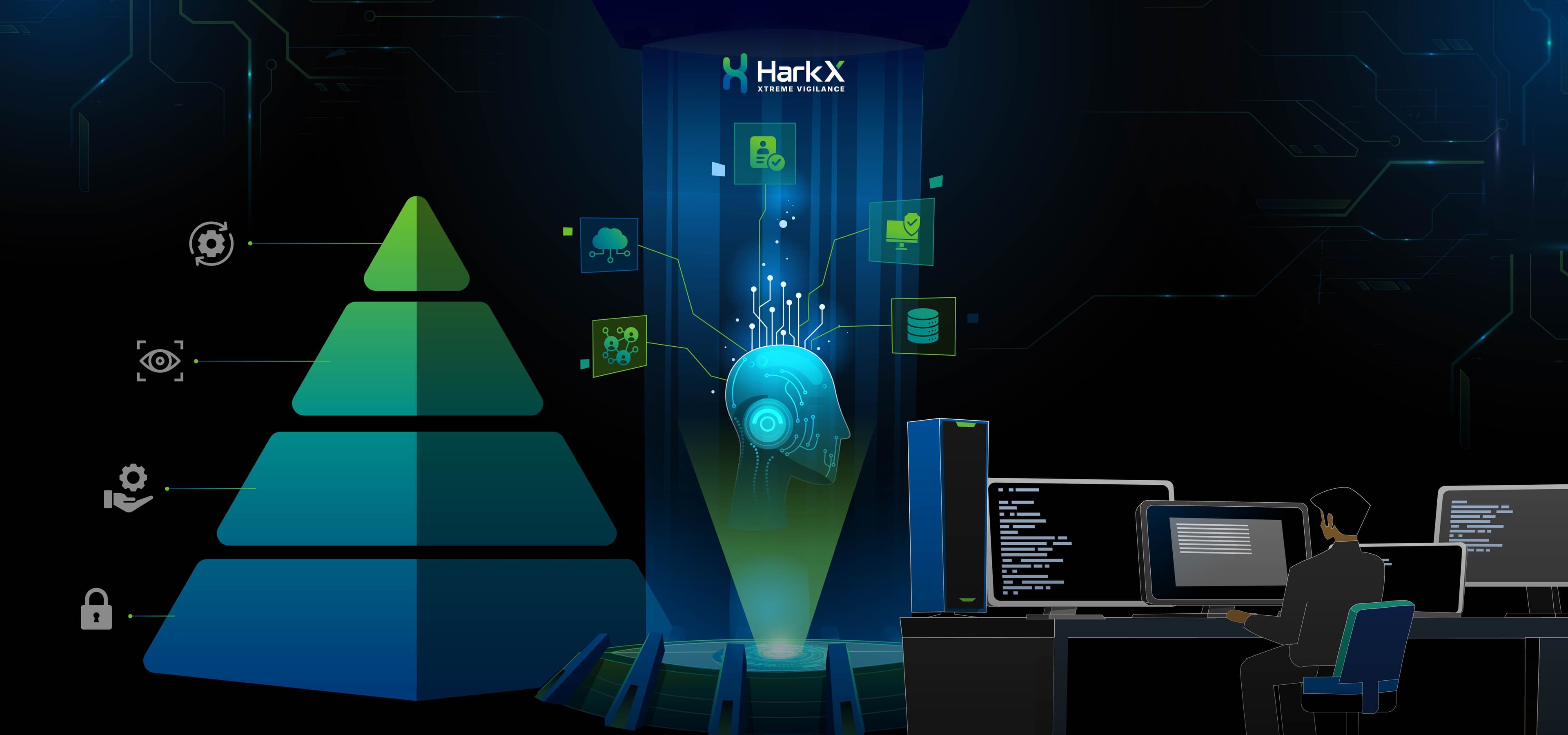
Modern SOCs are under constant pressure to move faster, investigate more alerts, and respond before attackers establish a foothold. Autonomous security operations make this possible.
But autonomy without governance creates risk.
Whether it's AI acting without oversight or traditional security operations lacking documentation, consistency, and accountability, the outcome is the same: decisions become difficult to trust.
The question is no longer whether autonomous security operations require governance—it's how to govern them effectively.
Autonomy Is a Design Choice
Many concerns about autonomous security operations stem from a common misconception: that systems capable of acting independently are inherently uncontrollable.
In reality, autonomy isn't an on/off switch. It's a spectrum that can be carefully designed, calibrated, and governed.
The guiding principle is simple: Humans remain accountable. AI executes within clearly defined boundaries.
This is the foundation of human-on-the-loop security, where:
- AI performs approved operational tasks autonomously.
- Humans supervise outcomes rather than individual actions.
- Analysts intervene only when exceptions or high-impact decisions arise.
Unlike traditional human-in-the-loop models, where every action requires approval, human-on-the-loop enables security teams to scale operations without sacrificing accountability.
The Case for Selective Autonomy
Effective governance isn't about choosing between full autonomy and manual control. It's about applying the right level of autonomy to the right task.
AI is best suited for:
- Correlating alerts across multiple data sources.
- Detecting known attack patterns.
- Enriching alerts with additional evidence.
- Performing routine, low-risk containment activities.
Human analysts remain responsible for:
- Interpreting attacker intent.
- Assessing business impact.
- Making escalation decisions.
- Responding to high-risk or business-critical incidents.
This tiered approach aligns AI authority with operational complexity, business risk, and the level of human oversight required—allowing autonomy to scale without removing human judgment from the decision-making process.
Governance Requires Architecture, Not Just Policy
A governance philosophy is only the starting point. In autonomous security operations, governance becomes meaningful only when it's translated into the operating model—how decisions are scoped, how exceptions are surfaced, and how reasoning is preserved for review.
Four core principles help turn governance into operational control.
1. Policy-Bound Decision Making: Autonomous actions should execute only within parameters defined by the organization, including:
- Severity thresholds
- Asset criticality
- Regulatory obligations
- Business risk limits
If those conditions aren't clearly met, the system should refrain from acting.
Governance at this layer isn't about limiting capability—it's about ensuring every autonomous action has already been authorized through organizational policy before it executes.
2. Risk-Calibrated Autonomy: Not every security decision requires the same level of independence.
Low-risk, high-volume activities can safely execute with greater autonomy, including:
- Alert enrichment
- Duplicate suppression
- Threat intelligence correlation
- Classification of known attack patterns
Higher-impact actions require human review before execution, particularly those involving:
- Production systems
- Privileged accounts
- Business-critical infrastructure
Autonomy should be earned based on operational risk—not applied uniformly across every task.
3. Context-Driven Execution: Autonomous decisions should be grounded in investigative context—not isolated signals.
A single alert rarely tells the complete story. Effective decision-making depends on understanding:
- Identity and user context
- Asset relationships
- Historical investigation data
- Integrated threat intelligence
- Business and operational context
When AI reasons across this broader context, its decisions become more accurate, consistent, and aligned with how experienced analysts investigate incidents.
Context isn't simply another data source—it's a governance requirement. Without it, even well-intentioned autonomous actions can produce the wrong outcome.
4. Full Auditability: Governance depends on more than recording what happened. Teams also need to understand why a decision was made.
Every autonomous action should preserve:
- The signals that triggered the decision
- The evidence collected
- The reasoning behind the outcome
- The actions that were executed
This creates a complete audit trail that allows analysts, security leaders, and auditors to review, validate, and continuously improve autonomous decision-making over time.
Where Human Judgment Stays Central
Effective governance isn't about removing humans from security operations. It's about ensuring they remain focused on the decisions where experience, business awareness, and accountability matter most.
Human analysts remain responsible for:
- Interpreting attacker intent
- Assessing business impact
- Making escalation decisions
- Communicating with business stakeholders during active incidents
AI strengthens the investigation by:
- Correlating evidence across multiple data sources.
- Surfacing investigative insights.
- Mapping activity to frameworks such as MITRE ATT&CK.
- Enriching investigations with internal and external threat intelligence.
This partnership creates a continuous feedback loop. As analysts validate and refine autonomous decisions, the system becomes more accurate over time.
The outcome isn't intelligence that's replaced by AI—it's intelligence that's amplified, allowing analysts to investigate with greater speed, consistency, and confidence.
The CISO's Governance Mandate
The CISO's mandate has shifted.
It is no longer about reviewing every alert or supervising every analyst decision. It is about defining governance boundaries, governing decision systems, and managing systemic risk at scale.
That requires a different operating model—designing governed systems rather than overseeing individual decisions.
Tiered autonomy frameworks give security leaders the architecture to expand AI authority on their own terms, starting with well-defined, low-risk tasks and extending it as confidence grows.
As autonomous security operations become mainstream, every security platform will eventually claim autonomy. The differentiator is not how much a platform automates, but whether it was designed to be governed from day one.
At HarkX, these principles are built into the platform by design—not to replace human expertise, but to enable faster, more informed, and more effective oversight across increasingly complex security environments.
Ultimately, the future of the SOC will not be defined by how autonomous its technology becomes. It will be defined by how effectively organizations govern that autonomy.
The goal is not automation for its own sake. It is security operations that reason intelligently, act within defined boundaries, and earn the trust of the teams they protect.
Discover how HarkX brings autonomous security operations to the enterprise. Explore the HarkX platform.
Additional Resources
- Agentic AI in SOC: Separating Reality from Hype
- Beyond AI Assistants: Copilots vs Autonomous Security Operations in Modern Cybersecurity
- How Context-Aware Investigations Are Reshaping Modern Security Operations
Frequently Asked Questions
Human-on-the-loop security is a governance model in which AI performs predefined security activities autonomously, while human analysts oversee outcomes and intervene only when necessary. Unlike human-in-the-loop models, where every action requires approval, human-on-the-loop enables faster security operations while preserving human accountability for higher-risk decisions.
Selective autonomy is an approach to autonomous security operations in which AI is granted varying levels of authority based on operational risk. Repetitive, low-risk activities such as alert enrichment, evidence collection, and known-pattern classification can execute autonomously, while higher-impact decisions involving production systems, privileged accounts, or business-critical assets remain under human oversight.
Governance ensures that autonomous security operations remain transparent, accountable, and aligned with organizational risk. By combining policy-bound decision making, context-driven execution, risk-calibrated autonomy, and full auditability, organizations can scale autonomy with confidence while maintaining human oversight for high-impact decisions.
About the authors
Mahita Surapaneni is a marketing manager specializing in cybersecurity and emerging technologies. She leads content and thought leadership initiatives that help business and security leaders navigate topics such as Agentic AI, security operations, cyber resilience, and the future of autonomous security.
Srinivas Rao is an AI/ML leader, product strategist, and enterprise transformation architect with nearly two decades of experience building enterprise-scale AI platforms, including Aadhaar's Identity Fraud Management System serving 1.3 billion citizens and Samsung Bixby. An IIT Kharagpur alumnus, he leads HarkX's product innovation, advancing the shift from traditional automation to autonomous, agent-driven security operations.
Loved this insight?
Share it with your network and help secure the digital world.