Agentic SOC vs SOAR: Why Hybrid Security Operations Beat Rip-and-Replace
Agentic SOC and SOAR solve different problems, treating them as substitutes only muddies the picture.


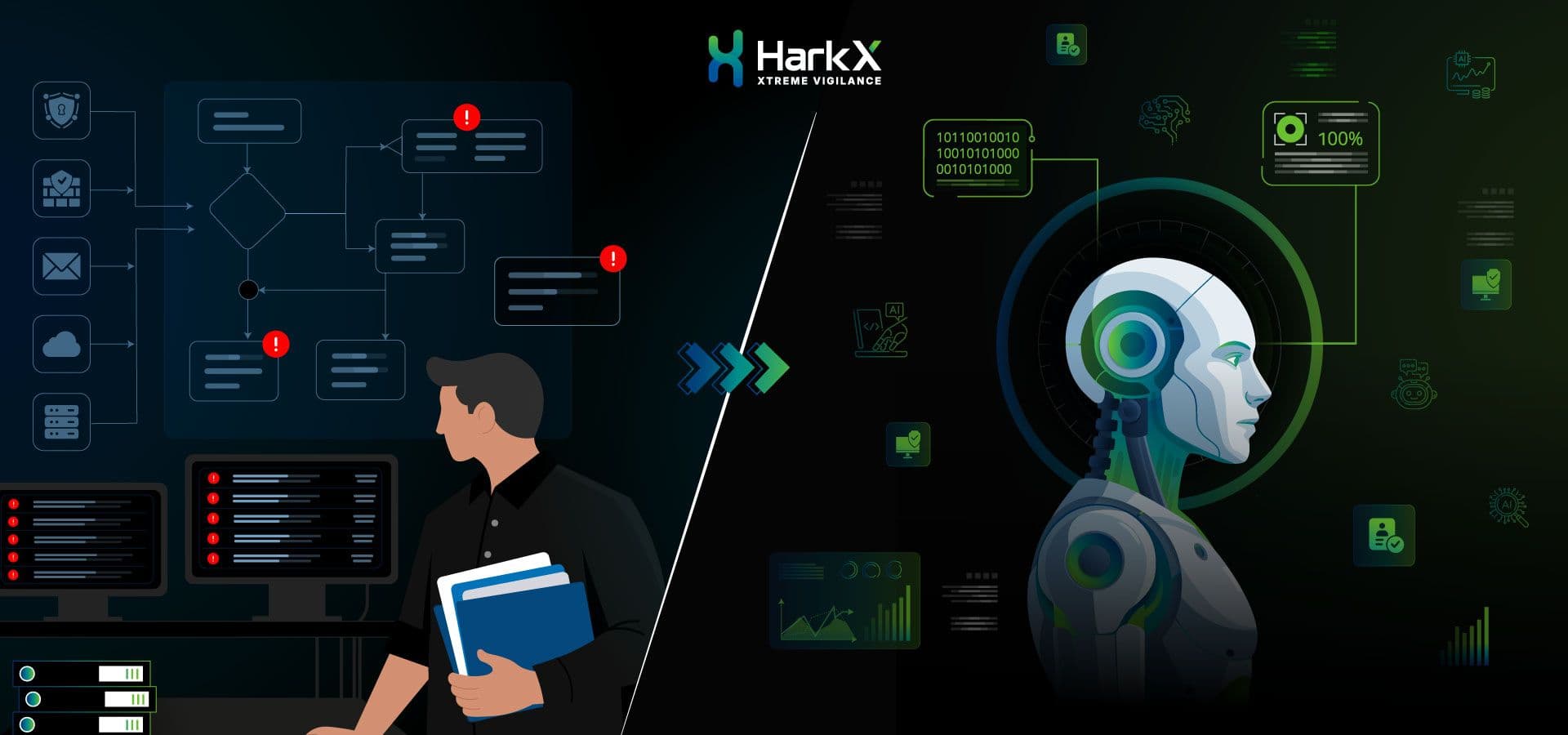
SOAR and an Agentic SOC aren’t competing for the same job. SOAR orchestrates predefined workflows and carries out response playbooks. An Agentic SOC does something different; it uses AI to investigate alerts, reason through evidence, and adjust its approach as the picture becomes clearer.
That distinction matters more than it might seem, because most modern security teams aren’t actually struggling with automation. They’re struggling with investigation. Analysts spend the better part of their day pivoting across tools, gathering context, validating evidence, and figuring out whether an alert is real risk or noise, long before any response even enters the picture.
Framing this as “SOAR versus Agentic SOC” sets up a false choice. The more useful question is how each one contributes to the investigation of the lifecycle.
A hybrid model tends to be the better answer. Let the Agentic SOC handle investigation, contextual reasoning, and evidence gathering and let SOAR keep doing what it’s always done well: executing deterministic response actions with the consistency, governance, and auditability it was built for.
What is SOAR?
SOAR (Security Orchestration, Automation, and Response) lets security teams connect their tools and automate repeatable work through predefined workflows and playbooks.
You’ll typically see SOAR used for:
- Alert enrichment
- Ticket creation
- Containment actions
- Notification workflows
- Escalation paths
Its biggest strength is consistency. By running the same predefined workflow every time, SOAR helps teams standardize their response, cut down on manual effort, keep a clean audit trail, and make sure routine actions happen the same way, shift after shift.
That consistency comes with a catch, though: someone must build and maintain it. Playbooks need to be written, integrations kept current, and workflows revisited every time the environment, detection logic, or business process shifts underneath them.
So, SOAR shines at execution-heavy work, but it starts to strain the moment an investigation calls for judgment, cross-platform evidence gathering, or a decision that doesn’t fit neatly into a predefined path. Static playbooks are great for predictable scenarios; the trouble is, modern investigations rarely stay predictable for long.
What is an Agentic SOC?
An Agentic SOC is built around autonomous AI agents that investigate alerts on their own, continuously. Rather than an analyst manually querying logs, pivoting across identities and endpoints, and deciding what to check next, the system does that legwork itself.
An Agentic SOC can:
- Gather evidence across your security tools.
- Correlate findings from multiple data sources.
- Build out investigative timelines.
- Form conclusions backed by evidence.
- Recommend the appropriate next step.
Unlike a traditional automation engine following a fixed script, an Agentic SOC keeps adapting to its investigation based on what it finds and the context of the environment it’s operating in.
That doesn’t mean it operates without guardrails, quite the opposite. It means the reasoning-heavy work that used to sit squarely with Tier 1 analysts, and increasingly parts of Tier 2, can now happen autonomously, while analysts stay firmly responsible for validating findings and making the actual response decisions.
For teams drowning in alert volume, that’s a real shift in how the SOC operates. Instead of automating one fixed sequence of steps, every single alert gets a context-aware investigation before anyone decides what to do about it.
SOAR vs Agentic SOC: Key Differences
Both SOAR and an Agentic SOC make security operations better; they just show up at different points in the incident's lifecycle. SOAR is about execution: automating predefined actions once a decision has already been made, or a predefined path has been followed. An Agentic SOC is about investigation: figuring out what actually happened, gathering the evidence, and reaching a conclusion you could defend before any response begins. This becomes especially valuable when that predefined path no longer holds up against unknown or novel adversaries.
| Capability | SOAR | Agentic SOC |
|---|---|---|
| Core function | Executes predefined response workflows and orchestration playbooks. | Investigates alerts end-to-end and reaches evidence-backed conclusions. |
| Handling unfamiliar alerts | Needs human intervention or a new playbook when a scenario falls outside its predefined logic. | Adapts its investigative approach as context and evidence evolve. |
| Ongoing effort | Requires continuous playbook updates, scripting, and connector maintenance. | Relies on contextual reasoning rather than fixed workflows and improves through analyst feedback and organizational context. |
| Skills required | Depends on automation engineers and scripting expertise to expand coverage. | Lets analysts validate AI findings with far less engineering overhead. |
| Path to improvement | Improves only when someone manually updates the workflows and playbooks. | Keeps getting better from prior investigations, analyst feedback, and environmental context. |
| Role in the SOC | Executes approved actions after a decision has already been made. | Builds the investigation and reaches a defensible conclusion before response even begins. |
Laid outside by side like this, one thing becomes clear: SOAR and an Agentic SOC aren’t rivals. They’re solving two different operational problems, and they complement each other rather well.
Why SOAR Alone Isn’t Enough Anymore
SOAR still earns its place in a modern SOC, but today’s investigations ask for more than deterministic automation can give them.
Modern attacks rarely move in a neat, linear fashion. They cross identities, endpoints, cloud workloads, SaaS applications, email, and networks, often evolving in ways no playbook was ever written to anticipate.
Static automation also gets harder to maintain the moment your environment starts changing, and it always does. New APIs, updated schemas, evolving business processes, and the occasional strange edge case all mean playbooks need constant review and revision just to stay relevant.
The real limitation here isn’t automation. It’s an investigation. Picture an attacker who logs in through Okta, pulls sensitive files from SharePoint, and later touches an AWS workload.
A SOAR playbook can enrich that alert, open a ticket, notify your analysts, or even kick off an approved containment action. What it can’t reliably tell you is whether those three events are connected, whether they reflect ordinary business activity, or whether you’re looking at pieces of the same attack.
That takes reasoning. It takes correlating identities, timelines, and behavioral patterns against organizational context before anyone can say with confidence that a response is warranted. This is exactly where an Agentic SOC earns its keep.
Instead of marching through a predefined sequence of steps, it investigates the alert on its own terms, pulling evidence from across your security stack, checking how events actually relate to one another, and adjusting course as new information surfaces.
The impact goes beyond just better investigations, too. By taking on the repetitive, reasoning-heavy work that used to define Tier 1 investigations, an Agentic SOC frees analysts to spend their expertise on validation, decision-making, and the incidents that genuinely need a human mind on them.
SOAR still owns the trusted execution of response actions. The Agentic SOC makes sure those actions are grounded in a complete, evidence-backed investigation, not a guess. Together, they build something sturdier than either one manages alone.
Evolving, Not Replacing: What Happens to Your Existing SOAR Playbooks?
For most organizations, bringing in an Agentic SOC doesn’t mean tearing out what’s already there in SOAR. It means giving it a clearer job.
Most SOAR playbooks are already doing exactly what they were built to do, executing deterministic, repeatable actions with consistency and governance. None of that stops being valuable just because investigation is becoming more autonomous, it simply gets triggered differently.
Instead of leaning purely on predefined rules or static detection logic, a response action can now kick off once an Agentic SOC has finished its investigation, gathered the supporting evidence, and reached enough confidence that acting is the right call.
That’s a smarter operating model. The Agentic SOC decides whether a response should happen.
SOAR decides how that response gets carried out. By keeping investigation and execution separate, organizations end up automating less unnecessary work, making better decisions, and knowing that every deterministic action is backed by real context, not just a lone alert.
A Practical Path to a Hybrid SOC
One of the biggest hesitations around adopting AI in security operations is the fear that everything already built has to be torn down first. In practice, the teams that succeed take the incremental route.
You don’t need to retire mature playbooks or unwind years of automation work. Instead, you introduce autonomous investigation exactly where it earns its value, while SOAR keeps handling controlled execution the way it always has.
A sensible starting point usually looks like:
- High-volume Tier 1 alert investigations.
- Clearly defined approval boundaries.
- Response actions that are already standardized.
- Clear success metrics for investigation quality and analyst efficiency.
Taking it in phases keeps disruption to a minimum, while giving your team room to build real confidence in AI-driven investigations over time. Rather than ripping out existing workflows, you’re strengthening them, adding intelligence exactly where manual effort has always run highest, which makes it a far more sensible migration path than a wholesale rip-and-replace.
It protects what you’ve already invested, speeds up adoption, and lets your team modernize the SOC without giving up the governance, consistency, and auditability SOAR already gives you.
When Is the Right Time to Adopt an Agentic SOC?
Organizations don’t adopt an Agentic SOC because AI happens to be trending. They adopt it when investigation, not automation, becomes the thing actually holding operations back.
Common signs to watch for:
- Persistent alert backlogs.
- Too much manual evidence gathering.
- Inconsistent triage quality between shifts.
- Multi-vendor environments that demand constant tool switching.
- Analyst fatigue building from repetitive Tier 1 work.
Another telling sign: your team already has SOAR, and investigations are still slow.
In those environments, execution was never really the bottleneck. The hard part is figuring out whether an alert is genuine, how far an attack has actually progressed, and which assets, identities, or business processes got touched along the way.
Good starting points tend to include:
- High-volume Tier 1 alert investigations.
- Identity-based detections.
- Endpoint and cloud security alerts.
- Routine evidence gathering and enrichment.
- Repeatable investigations with well-defined approval boundaries.
Taking this phased approach lets teams bring in autonomous investigation gradually, track the operational improvement, and build genuine confidence before tackling more complex scenarios.
Rather than replacing SOC processes wholesale, teams evolve them a step at a time, pairing AI-driven investigation with trusted automation and human oversight. That’s what makes a hybrid model actually work in practice.
How HarkX Powers the Hybrid SOC
In a hybrid SOC, HarkX sits as the intelligence and investigation layer, while SOAR stays on as the trusted execution engine.
Rather than replacing the automation you’ve already built, HarkX strengthens the investigation that decides whether an action should happen, before SOAR figures out how to carry it out.
HarkX autonomously:
- Validates alerts using contextual evidence.
- Collects and correlates data across your connected security tools.
- Maps relationships between identities, assets, applications, and cloud resources.
- Builds explainable, evidence-backed investigations.
- Recommends the most sensible next step based on what it finds.
Once it reaches a defensible conclusion, SOAR takes over, executing approved containment actions, creating tickets, notifying analysts, or triggering escalation workflows with the same consistency, governance, and auditability it was always built to deliver.
This split lets each technology focus on what it’s genuinely good at. The Agentic SOC investigates. SOAR executes.
Analysts oversee, validate, and make the calls that need human judgment.
A Better Way to Modernize the SOC
This model changes how analysts actually spend their day. Instead of manually hopping between consoles, chasing down evidence, or validating raw alerts by hand, analysts review investigations that already explain themselves, and spend their attention on the incidents that genuinely call for critical thinking, business context, and a real decision.
Routine Tier 1 investigations happen on their own, freeing security teams to put more time into threat hunting, detection engineering, proactive risk reduction, and the harder incident response work that actually needs a person.
For the organization, the benefit isn’t just efficiency. You get to modernize security operations without walking away from what you’ve already built in SOAR, keeping the automation you’ve invested in while bringing in AI exactly where it moves the needle most.
That’s what makes the transition practical and, just as important, sustainable.
Hybrid Security Operations Are the Future
The conversation shouldn’t be “SOAR or Agentic SOC?” anymore.
It should be “how do they work together?” SOAR is still exceptionally good at executing deterministic workflows with consistency and governance.
An Agentic SOC is genuinely good at investigating alerts, reasoning through evidence, and adapting to how complicated modern attacks have become. Put together, they build a security operating model that’s more intelligent, more scalable, and better suited to today’s threat landscape than either one could manage alone.
You don’t need to rip out years of automation investment to move forward. You need to strengthen the part of the SOC that’s quietly become the biggest bottleneck: investigation.
That’s where HarkX comes in.
By pairing autonomous investigation with explainable AI and human oversight, HarkX helps organizations modernize the SOC while still getting full value out of the security investments they’ve already made.
Explore the HarkX platform or book a demo to see how a hybrid SOC brings intelligent investigation and trusted automation together, for security operations that are faster and more consistent, without sacrificing control.
Additional Resources
- Beyond AI Assistants: Copilots vs Autonomous Security Operations in Modern Cybersecurity
- How Context-Aware Investigations Are Reshaping Modern Security Operations
- Why Building Agentic AI SOC is Hard?
- Agentic AI in SOC: Separating Reality from Hype
Frequently Asked Questions
Not in most enterprise environments. SOAR and an agentic SOC address different parts of security operations. An agentic SOC is designed to investigate alerts, gather evidence, and determine the appropriate course of action, while SOAR excels at executing predefined response actions. For many organizations, the two technologies are more effective together than as direct replacements for one another.
SOAR is built around predefined logic and repeatable response actions. While it can automate well-understood tasks, investigations often require gathering evidence across multiple security tools, adapting to new information, and determining whether seemingly unrelated events belong to the same incident. Those decisions rely on contextual reasoning rather than fixed playbooks.
Most organizations introduce an Agentic SOC alongside their existing SIEM, SOAR, EDR, identity, and cloud security platforms. A common starting point is high-volume alert categories where analysts spend significant time collecting evidence manually. As confidence in autonomous investigation grows, organizations can expand coverage while continuing to use existing response processes and security investments.
HarkX complements existing SOAR investments by serving as the investigation and reasoning layer. It autonomously gathers evidence, correlates findings across connected security tools, and produces an explainable investigation. Once a conclusion has been reached, existing SOAR playbooks can execute approved actions such as containment, ticket creation, notifications, or escalation, allowing organizations to modernize investigations without replacing their automation stack.
About the authors
Mahita Surapaneni is a marketing manager specializing in cybersecurity and emerging technologies. She leads content and thought leadership initiatives that help business and security leaders navigate topics such as Agentic AI, security operations, cyber resilience, and the future of autonomous security.
Sashank M is a Lead Security Analyst with over four years of experience in vulnerability assessment and penetration testing (VAPT), specializing in web, API, mobile, and network security. A recognized bug bounty hunter, he has earned Hall of Fame acknowledgments from organizations including Nokia and the United Nations, published CVEs and security research, and holds certifications including CREST CPSA, CMPen, CAP, and C-AI/MLPen.
Loved this insight?
Share it with your network and help secure the digital world.