A Roadmap for Adopting Autonomous Security Operations in the Enterprise
Autonomous security operations succeed through operational readiness, targeted use cases, controlled deployments, and phased expansion, thereby sustainably transforming the vision.


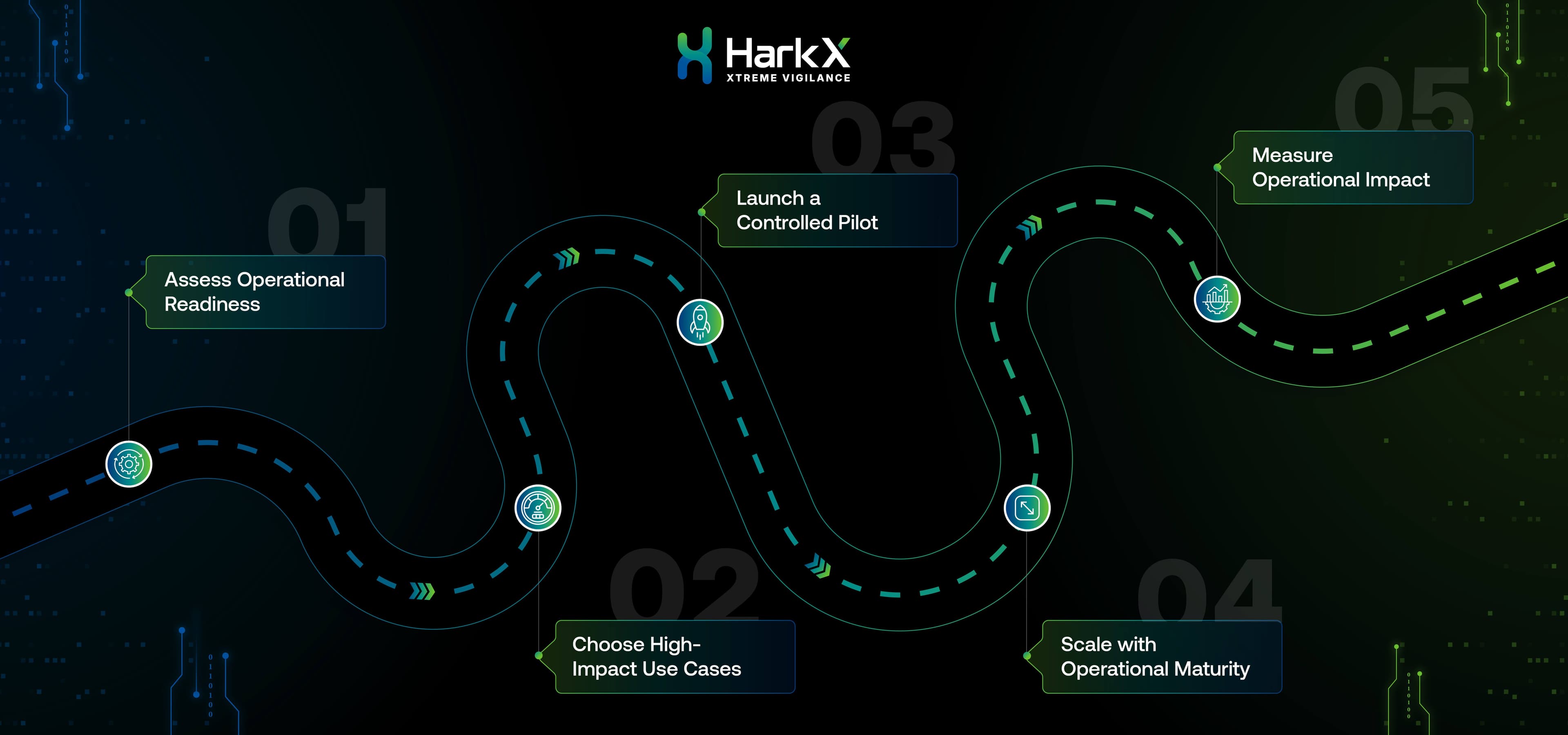
Autonomous security operations are rapidly moving from concept to reality. Enterprise security teams are already exploring how autonomy can reduce analyst workload, accelerate investigations, and improve consistency across day-to-day security operations.
The question is no longer whether organizations should adopt autonomous security operations, but how to introduce them in a way that aligns with their operating model, technical maturity, and readiness for change.
The most successful organizations don't treat autonomy as a one-time transformation. They approach it as a maturity journey, starting small, proving value, and expanding as operational confidence grows.
Start with Operational Readiness
Autonomous security operations shouldn't begin with evaluating tools. They should begin with understanding how security operations function today.
Before introducing autonomous capabilities, security leaders should assess:
- Which operational tasks are repetitive and time-consuming?
- Where analysts repeatedly collect or validate the same evidence.
- Which investigations already follow predictable workflows.
- Where existing processes provide clear decision logic.
These areas often deliver the fastest value because the work is structured, repeatable, and well suited to autonomous execution.
Operational readiness also depends on the surrounding environment. Consider whether your SOC has:
- Reliable telemetry and high-quality data.
- Mature integrations across the security ecosystem.
- Consistent investigation processes.
- Well-maintained case management practices.
Organizations with fragmented tooling or inconsistent data can still begin their autonomy journey, but long-term success depends on strengthening these operational foundations.
Choose Use Cases That Build Confidence
Once readiness is established, the next step is selecting where autonomy should begin.
The strongest starting points typically share a few common characteristics:
- High-volume operational tasks.
- Clear inputs and predictable outcomes.
- Limited ambiguity.
- Significant analyst effort with minimal need for complex judgment.
Typical early use cases include:
- Alert enrichment
- Evidence gathering
- Duplicate alert suppression
- Threat intelligence correlation
- Case summarization
- Routine investigative workflows
These activities consume valuable analyst time while following consistent patterns, making them ideal candidates for early autonomous capabilities.
Early success matters. Starting with focused, low-risk use cases helps teams build trust, demonstrate measurable value, and create momentum for broader adoption.
The key principle is simple: Choose use cases based on operational fit, not ambition.
Treat the First Deployment as a Learning Environment
Enterprise adoption rarely succeeds through a broad rollout. It succeeds through controlled learning.
An initial deployment isn't just about proving that autonomous capabilities work. It's about understanding how they perform within your organization's data, processes, and operational constraints.
Keep the first deployment intentionally focused:
- Limit the number of use cases.
- Clearly define the deployment scope.
- Establish measurable success criteria.
- Capture analyst feedback throughout the pilot.
Evaluate outcomes using operational metrics such as:
- Investigation time
- Analyst workload
- Case consistency
- Usage patterns
- Human intervention frequency
A successful pilot does more than validate technology, in fact it builds operational trust through repeatable results.
Expand Only When the Environment Is Ready
A successful pilot often creates pressure to scale quickly. However, enterprise adoption is most effective when expansion is driven by evidence, not momentum.
Autonomous security operations should grow in phases. Each successful deployment builds the confidence needed to expand into adjacent teams, processes, and environments.
A phased approach typically looks like this:
- Validate a focused use case.
- Expand into related operational workflows.
- Extend capabilities across additional teams or business units.
- Scale only after demonstrating consistent operational value.
Before expanding, consider whether each environment has:
- Reliable data quality and telemetry.
- Mature integrations across the security stack.
- Consistent operational processes.
- Sufficient evidence that autonomous capabilities are performing reliably.
Not every business unit or environment will be equally prepared. Scaling too aggressively can expose operational gaps that slow adoption rather than accelerate it.
The goal is sustainable expansion and not rapid expansion.
Measure Transformation in Operating Terms
One of the most common reasons autonomous security initiatives stall is because they're measured too narrowly.
The question isn't simply whether the technology works. It's whether the operating model is improving.
Beyond technical performance, security leaders should evaluate outcomes such as:
- Reduced analyst workload.
- Faster investigation times.
- Improved case quality and consistency.
- Increased operational scalability.
- More time spent on high-value investigations.
These operational improvements are what transform autonomy from an interesting capability into a measurable business outcome.
When organizations consistently track these metrics, they gain the confidence to expand beyond pilot deployments. Without them, even successful proofs of concept often struggle to move into production.
Adoption Before Optimization
The journey toward autonomous security operations is rarely defined by one major decision. Instead, it is built through a series of deliberate, well-executed steps.
Organizations that succeed typically follow a consistent pattern:
- Understand their current operating environment.
- Identify use cases where autonomy delivers immediate value.
- Validate those capabilities through controlled deployments.
- Measure operational outcomes.
- Expand only when the environment is ready.
This measured approach doesn't slow innovation, it makes it sustainable.
Rather than forcing organizations to redesign their existing security ecosystem, autonomous capabilities should strengthen the investments already in place and evolve alongside operational maturity.
At HarkX, we believe autonomous security operations should integrate naturally into the enterprise security ecosystem, not replace it. By building on existing processes, security investments, and operational maturity, organizations can adopt autonomy in a way that is both practical today and scalable for the future.
Interested in more perspectives on autonomous security, enterprise AI adoption, and emerging cyber threats? Explore expert insights from the HarkX team here.
Additional Resources
- Why Building Agentic AI SOC is Hard?
- The SOC’s Integration Ceiling: Why Dynamic Workflows Are Non-Negotiable for Modern Investigations
- How Context-Aware Investigations Are Reshaping Modern Security Operations
Frequently Asked Questions
Autonomous security operations use AI to perform security tasks such as alert enrichment, evidence collection, threat intelligence correlation, and parts of the investigation process with minimal human intervention. Rather than replacing security teams, they automate repetitive operational activities so analysts can focus on higher-value decisions, complex investigations, and incident response.
Successful implementation begins with operational readiness rather than technology selection. Organizations should identify high-volume, repeatable use cases, validate autonomous capabilities through controlled deployments, measure operational outcomes, and expand gradually as confidence and operational maturity grow.
HarkX helps organizations introduce autonomous security operations without requiring them to replace their existing security ecosystem. By integrating with existing security technologies and automating investigation and response activities, HarkX enables enterprises to adopt autonomy incrementally, measure its operational impact, and scale it confidently as their security operations mature.
About the authors
Mahita Surapaneni is a marketing manager specializing in cybersecurity and emerging technologies. She leads content and thought leadership initiatives that help business and security leaders navigate topics such as Agentic AI, security operations, cyber resilience, and the future of autonomous security.
Sasikumar Ganesan is a security architect, cryptographic systems engineer, and open-source technology leader with 20+ years of experience building privacy-preserving systems and national-scale digital infrastructure, including Aadhaar, MOSIP, and India's eSign framework. Authored Rahasya, an advanced open-source cryptography library, and recognized in Okta Ventures' Identity 25, he leads HarkX's vision for trust-first, agent-driven security operations.
Loved this insight?
Share it with your network and help secure the digital world.